World 07 · ice giant
Uranus
An ice giant rotating almost on its side.
Uranus is a cold ice giant whose extreme axial tilt produces unusually long and severe seasons.
Axis-first editorial diagram. The planet is shown on its side to communicate orientation, not a current seasonal pose.
- Order from Sun
- 7
- World type
- Ice giant
Mean radius
25,362km
51,118 km equatorial diameter
Solar day
17h 00m
Retrograde rotation
Temperature reference
-195°C
Atmospheric reference level, not a surface
Orientation
A world whose seasons roll sideways
Uranus's extreme axial tilt changes the geometry of light and time. Its calm visible appearance sits over an ice-giant interior and a long seasonal cycle.
Tilt
The axis is the dominant fact
Uranus rotates with an axial tilt near ninety-eight degrees, effectively carrying its poles through the plane of its orbit.
Because one orbit lasts about eighty-four Earth years, each season extends across decades rather than months.
Ice giant
Not a smaller blue Jupiter
Uranus and Neptune are classified as ice giants because their composition and internal structure differ from the hydrogen-helium-dominated gas giants.
Methane absorbs red light and contributes to the pale cyan appearance, but color alone is not the definition of the class.
Reference signals
The conditions that define this world
A hydrogen-helium atmosphere with methane that absorbs red light.
Rings
Dark, narrow and easy to miss
Uranus has a faint ring system. It belongs to the planet's architecture even though it does not dominate the view like Saturn's rings.
Moons
A dated family around a tilted world
The recognized moon count is stored with an as-of date. Miranda, Ariel, Umbriel, Titania and Oberon are highlighted in the reference catalog.
Temperature
A cold atmospheric reference
The displayed value uses an atmospheric reference level, not a surface that a visitor could reach and stand upon.
- Axial tilt
- 97.8°
- Recognized moons
- 29 · 2026-07-17
- Rings
- Uranus is surrounded by a faint ring system.
- Atmosphere
- hydrogen · helium · methane
Exploration record
How we learned to read this planet
Mission summaries are tied to dated official records and are not presented as live telemetry.
- 01
Completed flyby
Voyager 2
Voyager 2 remains the only spacecraft to have studied Uranus at close range, discovering new moons and rings during its 1986 encounter.
Personal comparison
Put the numbers against your own body
Gravity, day length and sunlight delay become more understandable when related to an Earth reference.
Your Earth reference
A familiar gravity ratio in an unfamiliar layer
The one-bar reference gravity is close to Venus's and below Earth's. As with every giant planet, it is not a walkable surface measurement.
Use a value from 0 to 1,000 kilograms.
Uranus scale equivalent
—kg
This is an Earth-style scale equivalent. Your mass does not change, and a giant-planet value refers to a defined atmospheric level rather than a place to stand.
Scientific limits
What these values do—and do not—describe
Reference values keep their definition, source and date context. Editorial diagrams are separated from measured planetary data.
Sources and provenance
- NASA Jet Propulsion LaboratoryPlanetary Physical Parameters ReferenceAccessed Jul 17, 2026
- NASA Jet Propulsion LaboratoryApproximate Positions of the Planets ReferenceAccessed Jul 17, 2026
- NASA SciencePlanet Sizes and Locations in Our Solar System ReferenceAccessed Jul 17, 2026
- NASA ScienceTemperatures Across Our Solar System ReferenceAccessed Jul 17, 2026
- NASA ScienceUranus: Facts ReferenceAccessed Jul 17, 2026
- NASA Jet Propulsion LaboratoryPlanetary Satellite Discovery Circumstances Latest availableAccessed Jul 17, 2026
- NASA ScienceVoyager 2 HistoricalAccessed Jul 18, 2026
NASA mission media
Uranus, through a mission archive
Every preview comes from the reviewed NASA media list for that world. A failed request can only fall back to media curated for Uranus.
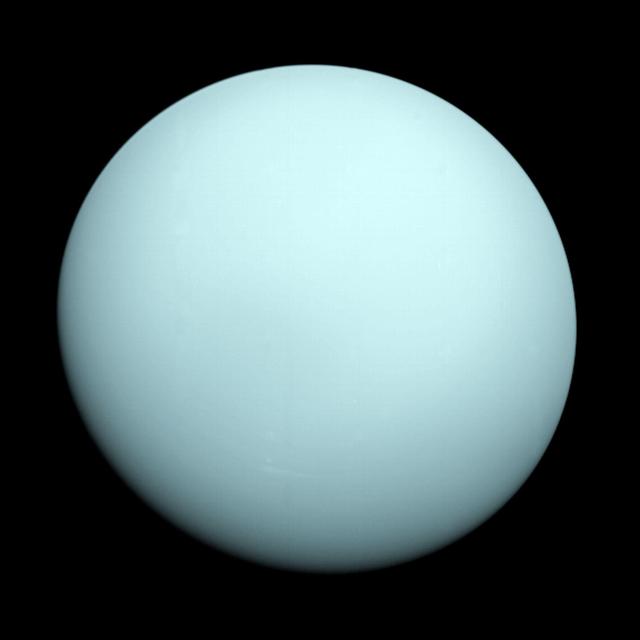
Uranus as seen by NASA Voyager 2
This is an image of the planet Uranus taken by the spacecraft Voyager 2 in 1986.
NASA/JPL-CaltechNASA media details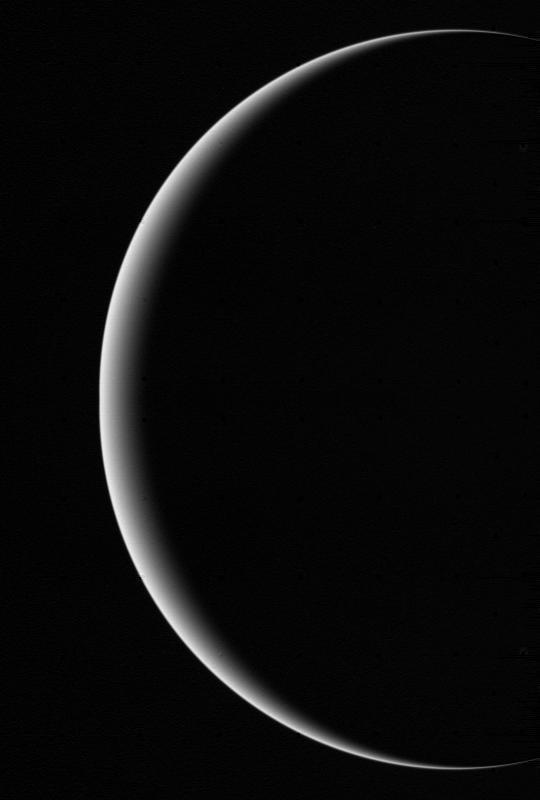
Color Voyager 2 Image Showing Crescent Uranus
This image shows a crescent Uranus, a view that Earthlings never witnessed until Voyager 2 flew near and then beyond Uranus on Jan 24, 1986.…
NASA/JPL/USGSNASA media details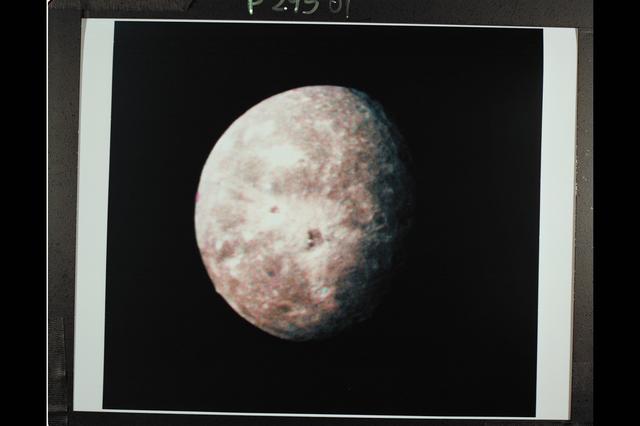
ARC-1986-AC86-7017
P29501C Moon from Voyager 2 Uranus flyby
JPLNASA media details